


Babies may not be able to talk, but they can still communicate and make demands! The key to a healthy, happy baby is knowing when they want to feed and feeding them before they get upset and cry – you'll soon learn your baby's own signs.
Settling into a feeding pattern
In the early days, you might find that most of the time your baby cries so they can get fed, so feed them as often and for as long as they want. It’s all about getting used to feeding and allowing your body to establish a good milk supply.
Don’t worry, you can't overfeed a breastfed baby in these first few days and weeks.
Babies are very good at knowing how much milk they want to have. It’s a good thing if they are enjoying their milk! They will get into a feeding pattern as the months go on which will make it easier to judge when they need to be fed, which will help you plan your days better.
How to spot when your baby is hungry
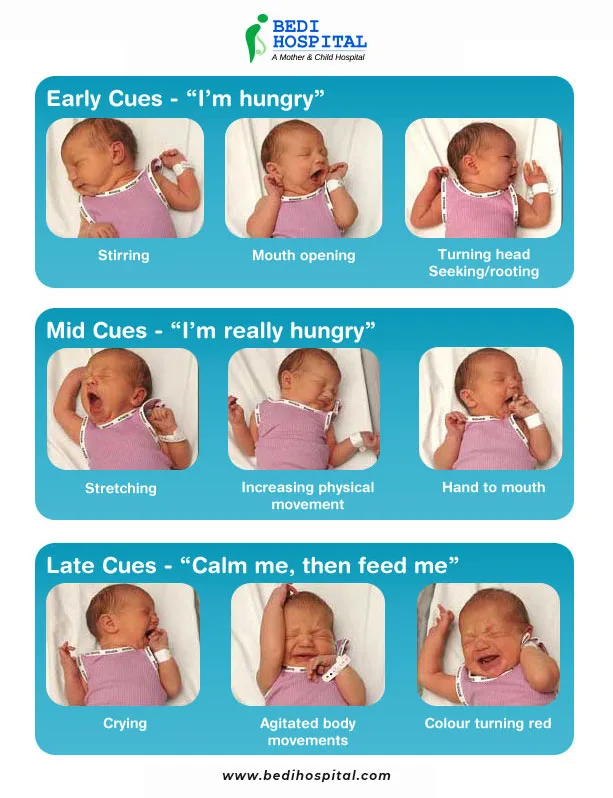
There are three stages of feeding cues, early, mid and late.
1. Early cues: these mean ‘I’m hungry’
- Stirring
- Mouth opening
- Turning head.
2. Mid cues: these mean ‘I’m really hungry’
- Stretching
- Physical movement
- Hand to mouth
3. Feed me: these mean ‘I’m really upset’
- Crying
- Agitated
- Turning red.
The image below shows how your baby may look during these stages.
Communication
One of the hardest parts of being a new parent is figuring out what your baby wants. Even the most experienced parents can be at a loss as to why their baby is crying. But over time you will start to recognise what they’re trying to say to you. No matter what’s wrong, just trying to understand and respond shows your baby that they’re cared for and safe. And that is often enough.
Some common cues babies give us include
- More or less crying than usual.
- They are more sensitive than usual, and taking more breaks in play by looking away, crying, fussing, or spitting up more than usual.
- Looking for more comfort than usual (wanting to be picked up more than usual and becoming more distressed when they’re put down).
- Returning to “younger” behaviours or seeming to lose skills for a while (these come back, don’t worry!).
- Changes in eating or sleeping patterns.
Some of these happen anyway as babies grow and develop. They might be teething, learning to crawl or learning to digest new food. It’s normal for them to be more upset than normal during these times. It’s always right to respond to your baby with comfort, soothing and curiosity. You can’t spoil a baby with love!
This article is general information, not medical advice. Please speak to your doctor about your own situation. In an emergency, call 08045776776 or come straight to Bedi Hospital, #182, Sector 33-A, Chandigarh.