Sit fully clothed
You do not need to change or undress.

Cosmetic and aesthetic gynaecology with the Emsella chair, keyhole and hysteroscopic surgery, menopause care and everyday gynaecology, with Dr G.K. Bedi and Dr Parul Bedi.
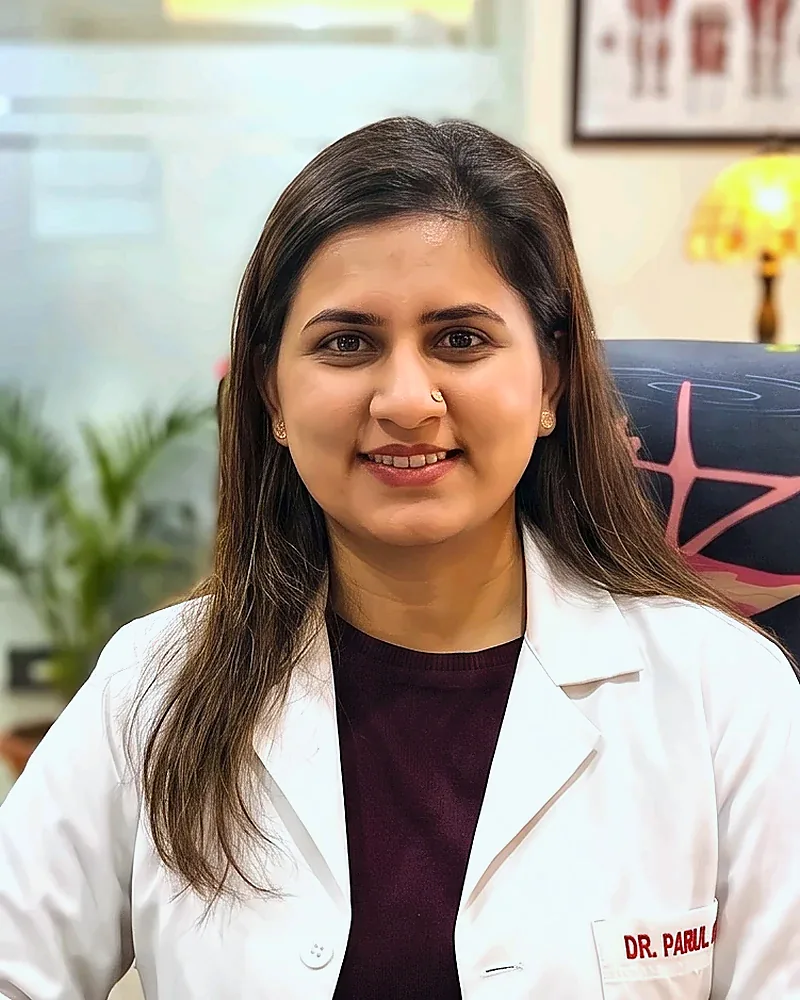
A non-invasive, FDA-cleared treatment for a weaker pelvic floor and urinary leakage. You sit fully clothed. Dr Parul Bedi will assess you first.
You do not need to change or undress.
Comparable to 11,000 Kegels in one session.
Most women go back to their usual day straight afterwards.
Typically six sessions, twice a week, which Dr Parul Bedi will confirm.
Figures from BTL clinical data. Results vary.

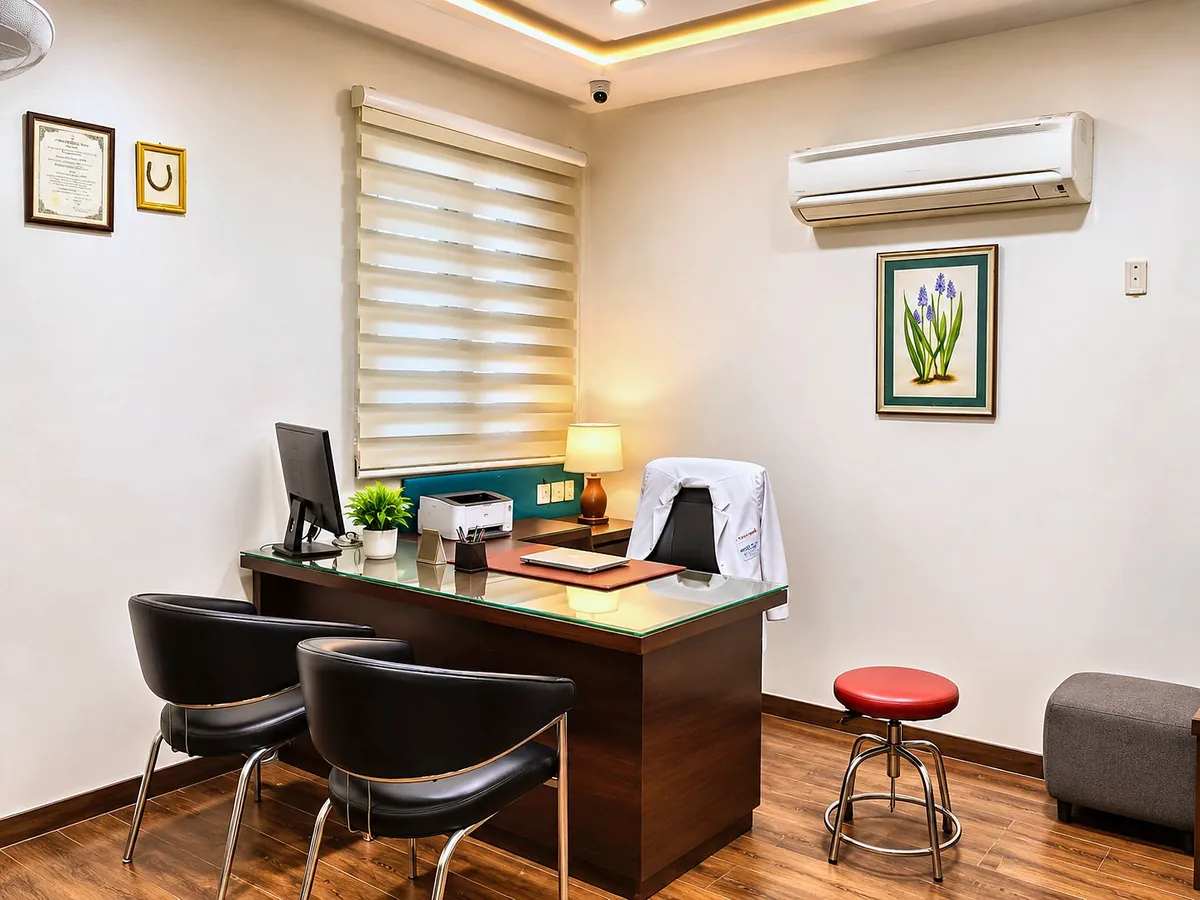
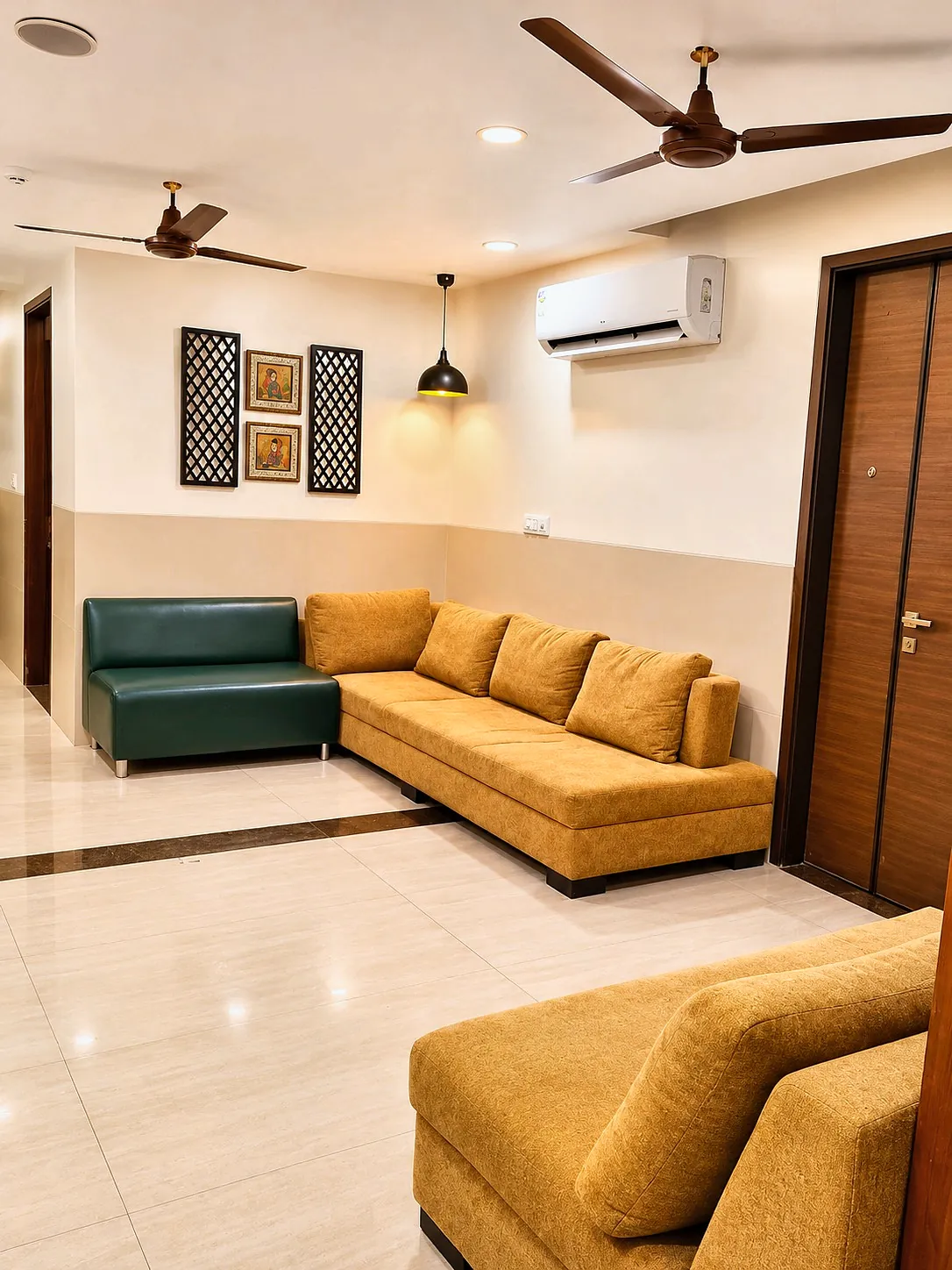
Quiet consultation rooms and a comfortable waiting lounge at Sector 33-A, Chandigarh.
Heavy, painful or irregular periods, and bleeding between periods.
Scans, medical treatment and keyhole surgery when needed.
Assessment and treatment, including laparoscopy.
Symptoms, bone health and post-menopausal bleeding. Listed clinic: Sunday, 10 AM to 6 PM (please call to confirm).
Keyhole surgery for fibroids, cysts, endometriosis and hysterectomy, often day care or a one-day stay.
Contraception advice in late pregnancy, after delivery or at any gynae visit.
Health checks and planning before marriage or pregnancy.
Periods, growth and health questions for teenage girls. Listed clinic: Wednesday, 10 AM to 6 PM (please call to confirm).
Irregular periods, acne, weight and fertility concerns: diagnosis and a long-term plan.
Scans, follow-up and keyhole surgery when a cyst needs removal.
A thin camera to look inside the womb, for polyps, abnormal bleeding or fertility.
Cervical screening, and a closer look at the cervix if a result needs follow-up.
Protection against the virus behind most cervical cancers.
Vaginal infections, discharge and urinary tract infections.
Bladder leaks, prolapse and pelvic-floor problems.
Bedi Hospital in Sector 33-A, Chandigarh has its own operation theatre and labour room, so gynaecological and obstetric surgery takes place in the same building as maternity, IVF and our Level IIIA NICU. Our gynaecologists, led by Dr G.K. Bedi, Head of Gynaecology and Infertility, with Dr Parul Bedi, who has a special interest in laparoscopy and endoscopic surgery, plan each operation after a consultation. Your doctor will advise which approach — keyhole, hysteroscopic, vaginal or open — is right for you.
A thin camera through small cuts on the tummy, to look at the womb, tubes and ovaries and find the cause of pain, infertility or a cyst.
Removal of the uterus through small keyhole cuts, often for fibroids, heavy bleeding, adenomyosis or endometriosis, when medicines have not helped.
The uterus is freed with keyhole instruments and then removed through the vagina, combining both approaches when that is the safer plan.
Removal of fibroids while keeping the uterus, by keyhole surgery or through a tummy incision when they are many or very large, for women who wish to preserve fertility or avoid a hysterectomy.
Removal of an ovarian cyst through small cuts, keeping as much healthy ovary as possible.
Laparoscopic treatment of endometriosis, to ease pelvic pain and, where possible, support fertility.
Emergency keyhole (or, when needed, open) surgery for a pregnancy outside the womb, usually in a fallopian tube.
Permanent contraception by blocking or sealing the fallopian tubes through small keyhole cuts.
Surgery to reopen or repair fallopian tubes, for example after a previous ligation or to help fertility, when it is the right option.
Release of pelvic scar tissue that can cause pain or affect the tubes and ovaries.
A selected option for some women with PCOS who have not ovulated with medicines, discussed only after a fertility assessment.
A slim camera passed through the cervix to look inside the womb, with no cuts on the tummy, often for bleeding, polyps or fertility concerns.
Removal of a polyp from inside the womb, usually in the same sitting as the diagnostic look.
Removal of a fibroid that sits inside the uterine cavity (a submucous fibroid), which can cause heavy bleeding or affect fertility.
Removal of a wall of tissue (septum) inside the womb, when it is thought to affect pregnancy or recurrent miscarriage.
Release of scar tissue inside the womb (Asherman's syndrome), which can cause light or absent periods and fertility problems.
Hysteroscopic removal of an intrauterine device that cannot be taken out in the clinic.
Removal of the uterus through a cut on the lower tummy, used when the uterus is large or keyhole surgery is not the safer choice.
Removal of the uterus through the vagina, including non-descent vaginal hysterectomy when it is suitable, with no cut on the tummy.
Repair of a descended uterus, bladder (cystocele) or rectum (rectocele), to ease a bulge, heaviness or bladder symptoms.
Planned or emergency birth of the baby through an incision on the lower tummy, when it is the safer choice for mother or baby.
A stitch placed around the cervix in selected pregnancies, to help keep the cervix closed when there is a risk of late miscarriage or preterm birth.
Gentle opening of the cervix and removal of tissue from the womb, for example after a miscarriage or to investigate bleeding.
A closer look at the cervix, and removal of a small area of abnormal cells, when a Pap smear or colposcopy needs follow-up.
A magnified look at the cervix after an unusual smear, often with a biopsy if needed.
Drainage or marsupialisation of a painful cyst or abscess at the vaginal opening.
A small sample of the lining of the womb, to investigate heavy or irregular bleeding or bleeding after menopause.
Fitting or taking out a copper T or hormonal intrauterine device, in the clinic or, when needed, under hysteroscopy.
This list covers the gynaecological and obstetric operations typically performed in our operation theatre and labour room. Not every procedure is suitable for every woman. Suitability, recovery and alternatives are explained before you decide.
Clinic times vary, so please call to confirm.
Classes and clinics for every stage, from planning a pregnancy to life after menopause.
Advice in late pregnancy, after delivery or at any gynae visit, including care at an approved MTP site.
A confidential conversation about health, contraception and planning a pregnancy when you are ready.
Reels from Dr Parul Bedi. Tap to play.
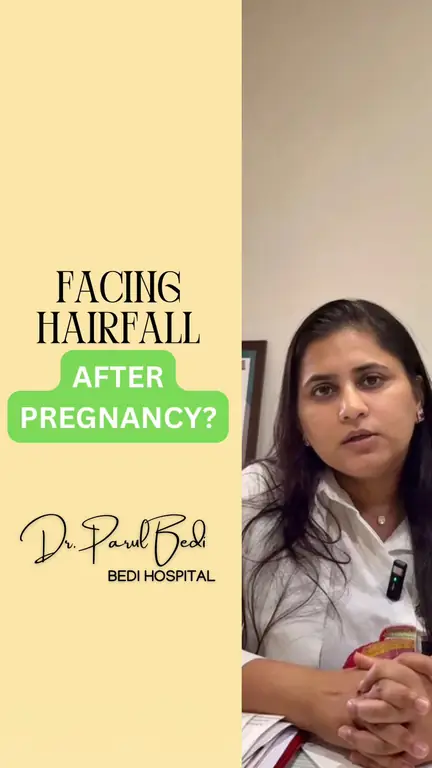 Hair fall after pregnancy?♥ 637 likes · Dr Parul Bedi
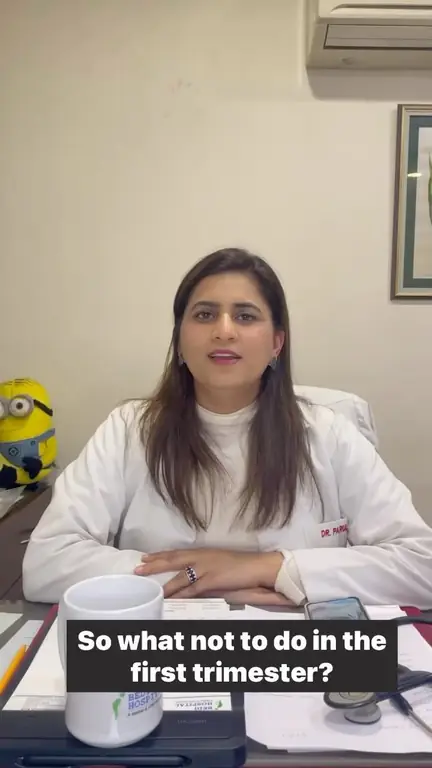 What not to do in the first trimester♥ 104 likes · Dr Parul Bedi
 What to eat after delivery♥ 155 likes · Dr Parul Bedi
Dr G.K. Bedi (MBBS, DGO), Head of Gynaecology and Infertility, has 34 years' experience in obstetrics, gynaecology and infertility. Dr Parul Bedi (MS, FMAS, Fellowship in Infertility and Endoscopy) has 15 years' experience, with a special interest in laparoscopy and infertility. They are joined by Dr Pallavi Sharma and Dr Vandana Bhatt, obstetrics and gynaecology consultants, so every gynaecologist on our team is a woman.
The gynaecology OPD runs 9 AM to 8 PM, Monday to Saturday. Dr Parul Bedi also sees patients on Sunday, 10 AM to 2 PM.
A yearly gynaecology check-up is a good habit at every age. It can include a pelvic examination, a Pap smear or HPV test, a breast examination and advice on contraception, periods and menopause. Our health check-up packages and the HPV vaccine help prevent problems before they start.
Women from Mohali, Panchkula, Zirakpur, Kharar and New Chandigarh see our gynaecologists for everything from periods and PCOS to keyhole surgery and menopause care.
Bedi Hospital is at #182, Sector 33-A, Chandigarh 160020 (near Rajasthan Bhawan). Search for “Bedi Hospital, Sector 33” in Google Maps for directions from your area, and call 08045776776 before you set out if you would like us to be ready for you. Emergency care is open 24x7, every day of the year.
Women's health, explained in a minute.
Practical advice from the Bedi Hospital team.
 Fertility & IVF
What polycystic ovary syndrome (PCOS) is, its common symptoms, how it is diagnosed and the treatment options for women in Chandigarh.
 Pregnancy & birth
What an annual gynaecology check-up includes, from a pelvic exam to a Pap smear, and why women of every age should book one each year.
 Women's health
The main risk factors for breast cancer, those you can and cannot change, and why regular breast checks matter.
Dr G.K. Bedi (Head of Gynaecology and Infertility), Dr Parul Bedi, Dr Pallavi Sharma and Dr Vandana Bhatt.
Dr Parul Bedi sees patients on Sunday, 10 AM to 2 PM. Emergency care is available 24x7.
Yes. All our gynaecologists are women: Dr G.K. Bedi (Head of Gynaecology and Infertility), Dr Parul Bedi, Dr Pallavi Sharma and Dr Vandana Bhatt.
Our gynaecologists perform laparoscopic (keyhole) surgery, including hysterectomy, myomectomy, ovarian cystectomy and endometriosis surgery; hysteroscopy for polyps, fibroids, a septum or adhesions; open and vaginal surgery, including prolapse repair; obstetric operations such as caesarean birth and cervical cerclage; and minor procedures such as D&C, cervical biopsy and Bartholin cyst treatment. Your doctor will advise which procedure, if any, is right for you.
Yes. Total laparoscopic hysterectomy (TLH) and laparoscopic-assisted vaginal hysterectomy (LAVH) are performed in our own operation theatre, when surgery is the right choice after a consultation.
Laparoscopy is keyhole surgery through small cuts on the tummy, to treat the uterus, ovaries or tubes. Hysteroscopy uses a thin camera through the cervix to look inside the womb, with no cuts on the tummy, and can often treat polyps, some fibroids or adhesions in the same sitting.
Often it is day care or a one-day stay, depending on the operation.
Surgery is planned by our gynaecologists, led by Dr G.K. Bedi, Head of Gynaecology and Infertility, with Dr Parul Bedi, who has a special interest in laparoscopy and endoscopic surgery, and consultants Dr Pallavi Sharma and Dr Vandana Bhatt.
Treatments for intimate comfort, continence and appearance, offered after a full gynaecological consultation. Suitability is decided by your doctor.
The Emsella chair, stress urinary incontinence treatment, post-partum pelvic-floor rehabilitation, laser vaginal rejuvenation, PRP ("O-shot"), vulval lightening, care for vaginal dryness and discomfort, labiaplasty, perineoplasty, vaginoplasty, clitoral hood reduction and hymenoplasty. Your doctor will confirm what is suitable after a consultation.
The Emsella chair, from BTL, is a non-invasive chair that uses focused electromagnetic energy (HIFEM) to strengthen the pelvic-floor muscles. You sit fully clothed for about 28 minutes. BTL clinical data describes a session as comparable to 11,000 Kegels. Results vary. Dr Parul Bedi will assess you first.
If they are very heavy, painful or irregular, if you bleed between periods or after menopause, or if anything worries you.
Book online with Docterz, or call or WhatsApp us. Tell us what you need and we will find you the right doctor and time.