

When you are pregnant and the due date approaches, most of the expecting mothers, especially the new one on the board, will wonder and worry about recognizing the first signs of labour.
Every cramp and discomfort can make them think, Is this it? Am I in labour?
Early Labour Signs & Symptoms
Here are some common signs of labour that you may experience in the weeks, days and hours before you give birth. Bear in mind, not all of these signs will happen for every single mother, but most do. Also, the signs and symptoms of normal labour can start three weeks preceding the expected due date until two weeks afterward.
Baby Drops
Medically known as "lightening," baby drops refers to the descending of the baby's head deep into the pelvis of the mother. Usually, anytime between 1 to 4 weeks prior to the beginning of the labour, the baby drops. However, this sign sometimes passes unrecognized by the mother. Here are some signs that indicate your baby is dropped or engaged.
An increased urge to urinate as the baby's head puts even more pressure on the urinary bladder. Breathing becomes easier since there is less pressure on the diaphragm from underneath. The heartburn that annoyed the expecting mother in the third trimester seems to vanish as the dropped baby will allow easy digestion and hence no chances of acid reflux
Mothers will experience increased pelvic pressure as the baby is resting on and carried by the pelvic bone
The Cervix Will Change
Towards the end of your pregnancy, you might have noticed your doctor or midwife frequently examine your cervix. This is owing to the fact that the cervix undergoes many significant changes as the labour approaches.
Dilation
Dilation of the cervix is a sign that you are approaching labour soon. It starts to dilate weeks before labour is about to set in. However, it dilates faster when the labour is near. It is said to dilate fully when it dilates around 10 cm
Effacement
Effacement or thinning of the cervix will also go hand in hand with dilation as the thinned cervix dilates more easily. However, the cervix of many mothers doesn't dilate or efface much until labour starts. Therefore, getting pelvic exams to predict the onset of labour for such mothers will not work
More Intense and Closer Contractions
A woman's uterus contracts her entire pregnancy, making it hard to distinguish (even for experienced mothers) the contractions that lead to labour. We help to simplify it for you by sharing some tips to help you to find out if you're having Braxton Hicks contractions, prodromal labour, or the real thing.
Braxton Hicks Contractions
These are usually painless contractions. You may feel your muscles tightening once or twice an hour, or a few times a day. However, as the pregnancy progresses, these contractions may turn more intense, and even painful at some point. But however strong they feel at the time, if they ease off, with movement, water, rest, they are probably just Braxton Hicks. Real labour contractions won't go away when you are active, change positions, or drink water. Therefore, if the contractions don't ease up, you may be in labour
Prodromal labour
Also called false labour, is different than Braxton Hicks contractions, as unlike Braxton Hicks contractions, it generates pain, and stay longer, stronger and closer, really mimicking actual labour pain. However, prodromal labour either doesn't mean the baby is on the way. It's believed that the baby's position is what causes prodromal labour. It is body’s way to get the baby into the most favorable birth position. Its contractions can be irregular and increase in frequency—but only up to certain point
Real labour
The real labour contractions are characterized by contractions that are progressively closer, last progressively longer, and eventually becomes progressively stronger. Movement, water, and changing positions have no influence over contractions. If this is what you're experiencing, then you are closer to going into labour. You can have these contractions alone, combined when you are near the labour
Low Back Pain and Cramping
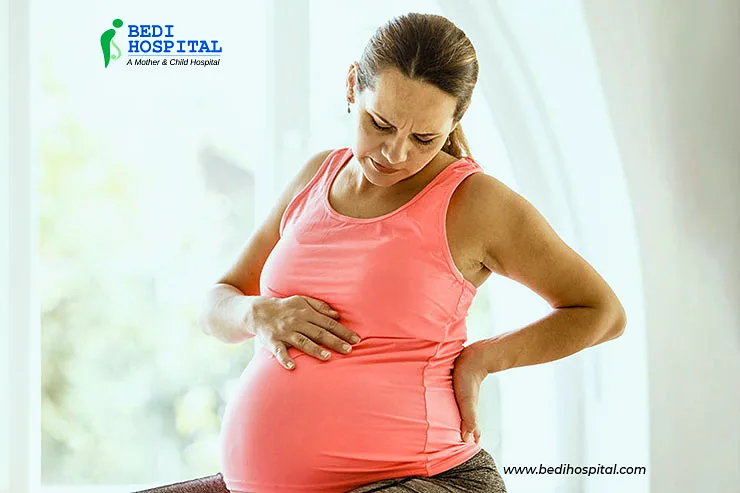
During pregnancy, the expecting mother feels increasing pressure or cramping in her pelvic and rectal areas. She may also feel cramping and pain in her lower back (often dull). This happens because the muscles and joints stretch and shifts as a part of getting ready for giving birth.
Joints feel looser
As the labour becomes near, one will feel clumsier as the joints feel more relaxed instead of tightening. This is due to the action of increased pregnancy hormones that loosens the joints as a part of paving way for the little one to move effortlessly through the birth canal
Vaginal discharge
As the labour nears, you'll likely see the vaginal discharge increases and it appears to be thicker than usual vaginal discharge
Diarrhea
Many expecting mothers experience diarrhoea as the labour approaches. Prostaglandins are a hormone that the body releases to facilitate the effacement of the cervix. As the labour comes nearer, along with relaxing the muscles that help to pass the baby through the birth canal easily, the pregnancy hormones relax other muscles in the expecting mother's body as well. This includes those in the bowel and rectum, resulting in diarrhoea
Blood drops on panty
The expelling of the mucus plug that closes the opening of the cervix to block the external factors to get into the uterus can be considered as a sign of nearing labour. This can often result in "bloody show" as it results in blood-tinged vaginal discharge.
Happy & healthy labouring.
This article is general information, not medical advice. Please speak to your doctor about your own situation. In an emergency, call 08045776776 or come straight to Bedi Hospital, #182, Sector 33-A, Chandigarh.